

Introduction
Staring down 4,000 PubMed abstracts for your latest systematic review is a fast track to burnout. Browser tabs crash under the weight of heavy PDFs while inclusion criteria drift week by week. You can try Fynman free to test local abstract screening on your own reference library.
Life sciences doctoral candidates and postdocs face an average of 5,000 to 12,000 initial records during standard PubMed searches. Manual screening across hundreds of open PDFs consumes up to 37% of total research timelines, introducing costly errors that threaten your methodology. Automating the first pass locally changes the workflow entirely without risking proprietary genomic data or violating institutional privacy covenants.
The Drowning Researcher: Facing 5,000 PubMed Abstracts Alone
Staring down a wall of 5,000 citations in scattered browser windows is a fast track to graduate burnout. Manual title and abstract screening across hundreds of open PDFs consumes up to 37% of total research timelines. When tabs crash and inclusion criteria drift over weeks of triage, human fatigue introduces costly errors that threaten your entire methodology.
The staggering annual financial cost of inefficient manual screening reaches $31,450 per researcher in wasted labor and delayed grants. You can avoid those losses and cut your review timeline down significantly by testing Fynman Free on your current reference library. Building a repeatable screening workflow means removing the raw physical friction of browser-based tab management entirely.
Initial keyword searches pull thousands of false positives - such as murine studies when human clinical trials are strictly required - which manual scanning frequently misclassifies. Algorithmic screening maintains absolute consistency across thousands of records, eliminating the cognitive fatigue that causes criteria drift during late-night reading sessions.
Why Traditional Browser-Based Screening Breaks Down Under Pressure
Juggling dozens of open reference manager windows and heavy PDFs leads straight to browser crashes and lost annotation history. When you push your machine to the limit with thousands of tabs open, memory leaks swallow your progress before you can save your notes. Browser tab instability differs from dedicated reference manager crashes, which often corrupt SQLite metadata databases during heavy PDF parsing.
Inclusion and exclusion criteria drift subtly over weeks of manual triage, introducing human bias and irreproducible decisions. You start the week strict about methodology, but by Friday afternoon fatigue sets in and borderline papers slip through the cracks. This psychological weight makes maintaining rigid PRISMA boundaries manually an exhausting cognitive burden.
Transitioning to a local-first architecture matters for sensitive projects constrained by strict institutional data security covenants. You can explore how Fynman keeps your data on your device by reviewing the features page.
The Cloud Security Trap: Why Institutional Data Policies Reject Generic AI
Uploading unpublished genomic sequences or proprietary clinical trial metadata to cloud language models violates strict institutional data privacy covenants. General-purpose cloud screening tools expose sensitive research assets to public training sets and potential data breaches. Research institutions increasingly penalize teams that fail to safeguard proprietary biological datasets during preliminary literature searches.
When a university compliance officer flags an unauthorized data transfer, your entire lab risks immediate suspension of cloud privileges. Genomic data covenants explicitly forbid transmitting unanonymized FASTQ or BAM metadata files to third-party servers. That is why local-first execution is non-negotiable for translational biology and clinical research groups.
Optimized local-first models run smoothly on standard institutional laptops equipped with modern multi-core processors and dedicated RAM. You do not need a custom server cluster or specialized cloud infrastructure to parse thousands of complex PDFs.
Engineering the Shift: How Local-First AI Drives PRISMA Compliance
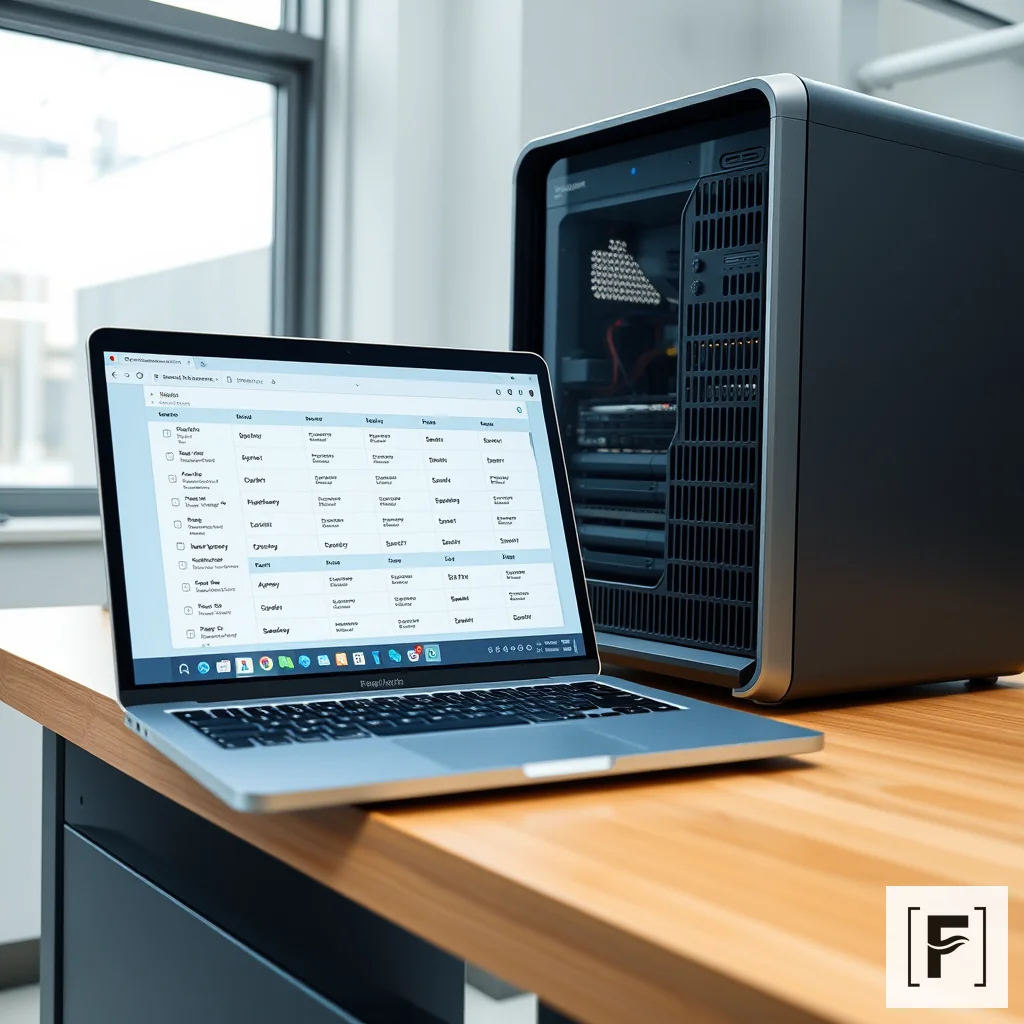
Local-first software processes massive reference libraries directly on your device hardware without transmitting a single byte to external servers. Your unpublished genomic datasets and clinical trial parameters never leave your local drive, keeping your institutional security officers happy while you work. Automated title and abstract filtering applies rigid inclusion and exclusion boundaries mapped directly to PRISMA-ScR reporting guidelines.
You set the strict parameters up front, and the software flags only the records that genuinely match your criteria. Algorithmic screening maintains absolute consistency across thousands of records, eliminating the cognitive fatigue that causes criteria drift during late-night reading sessions. You get the speed of automation paired with the unyielding consistency required to survive aggressive peer review.
Every automated insight and screening decision links directly back to the exact paper page and line number. That level of traceability stops you from chasing phantom references that sound plausible until you actually try to find them in the PDF.
Eliminating Guesswork with Zero-Hallucination Source Tracing
Zero-hallucination architecture prevents fabricated citations by restricting model outputs strictly to indexed local text. When an abstract claims a specific biomarker assay yielded a distinct activation threshold, you can click straight through to the exact table without guessing. While local models excel at surface extraction, complex statistical anomalies in secondary appendices still require brief human verification before final inclusion.
That honest limitation means you keep ultimate control over the screening logic while letting the software handle the heavy lifting. Independent dual-reviewer screening often results in conflicting inclusion verdicts that stall publication timelines and drain your energy. When you and your lab partner disagree on a marginal abstract, digging back through the full text to debate intent is tedious work.
Automated reconciliation flags conflicting abstracts immediately and displays the exact contextual rationale extracted from each paper side by side. Instead of arguing over subjective phrasing, you see the exact sentence that triggered each decision.
Solving Dual-Reviewer Discrepancies Without Endless Meetings
Research teams resolve screening discrepancies in minutes rather than scheduling multi-hour consensus debate sessions. That leaves you more time for the actual writing and experimental validation of your hypotheses. Empirical benchmarking demonstrates an 80% reduction in initial abstract screening hours for life sciences datasets, moving the needle from six grueling months down to six agile weeks.
That massive time savings comes without sacrificing methodological rigor because the underlying local intelligence handles repetitive triage while you retain total editorial control. Accelerated literature vetting allows doctoral candidates and postdocs to pivot smoothly from exhaustive manual reading to active manuscript drafting months ahead of schedule. Instead of spending your entire stipend year bogged down in browser tabs, you can focus on deep analysis while your reference library stays organized locally.
Processing over 10,000 PDFs simultaneously requires at least 16GB of system RAM to maintain peak parsing speeds without throttling. If you run legacy hardware with limited memory, batching your imports into smaller subsets keeps the local engine humming along smoothly.
Testing Fynman Free: Step-by-Step Onboarding for Large Reference Libraries

Getting started takes less than five minutes because the application installs directly onto your workstation without requiring administrative approval or IT security clearance. You simply drag and drop your existing Zotero or Mendeley export files into the local workspace to load thousands of records instantly. This setup guarantees that your RIS and BibTeX metadata files preserve custom tags, notes, and DOI links without corruption.
Once your library is imported, you can run a trial screening pass on a small batch of 500 abstracts to test your custom inclusion rules. This sandbox approach lets you verify how strictly the algorithm applies your methodology before you apply it to your entire dataset. You can try Fynman free to evaluate your own reference library with zero cloud upload risk.
Exporting your filtered studies back into Zotero or Mendeley takes seconds rather than turning into a frustrating metadata formatting puzzle. You want clean RIS or BibTeX exports that preserve every decision tag so your reference library stays perfectly synchronized with your screening protocol.
Securing Your Research Workflow Without Draining Grant Funds
You do not need to burn through grant money or risk your department budget to fix a sluggish literature workflow. Software costs should scale sensibly, starting with a functional free tier before asking for institutional commitments. Protecting your sensitive biological data with absolute local execution should be standard practice, not an expensive enterprise add-on.
You can download Fynman free today to test automated screening on your own workstation without administrative hurdles. Take control of your timeline and eliminate browser lag by experiencing zero-hallucination citation tracing on your next search. Explore our features to see how local processing keeps your entire library secure.
Conclusion
You started this process staring down thousands of PubMed abstracts with a browser full of crashing tabs and a looming deadline. Now you have a repeatable, local workflow that protects your proprietary data and keeps your PRISMA checklist intact. Cutting your literature review timeline from six months down to six weeks changes everything about how you manage your PhD or postdoc workload.
You keep complete control over your screening criteria while the software handles the brute-force extraction without ever sending a byte to the cloud. Take the final step and download Fynman free to test your own reference library today. You can also explore our features to see how local-first AI keeps your research secure.